Arisa vs. Paola Iezzi: Unpacking the Explosive Social Media Clash
The digital age has transformed how we experience celebrity, often turning public disagreements into viral sensations. Few recent events illustrate this better than the intense social media confrontation that erupted between Italian singer Arisa (Rosalba Pippa) and Paola Iezzi, one half of the iconic duo Paola & Chiara. What began as veiled criticism swiftly escalated into a fiery exchange, captivating audiences and sparking wider debates about celebrity activism, authenticity, and the volatile nature of Arisa's social presence.
This high-profile clash wasn't just about two artists but touched upon sensitive issues surrounding the LGBTQ+ community, political affiliations, and the courage required for public figures to voice their opinions. It exposed the raw emotions often simmering beneath polished public personas, highlighting how quickly social media can become both a platform for advocacy and a battleground for personal attacks.
The Genesis of the Conflict: Paola Iezzi's Provocative Statements
The fuse for this explosive exchange was lit when Paola Iezzi, alongside her sister Chiara, stepped into the spotlight as godmothers of the Gay Pride event. Riding a wave of renewed popularity following their successful appearance at the Sanremo Festival with "Furore," Paola used the platform to subtly, yet pointedly, address what many perceived as Arisa's controversial remarks concerning Premier Giorgia Meloni and her stance on LGBTQ+ rights. While Arisa had not directly endorsed Meloni's policies, her comments had been interpreted by some as a lack of strong solidarity with the LGBTQ+ community, particularly in contrast to her previous outspoken support.
In an interview, Iezzi remarked, "Many artists are afraid of not working anymore if they expose themselves in certain ways, not all of us have the same 'self-confidence' or cover." She continued, adding a layer of perceived empathy mixed with expectation: "Perhaps she, too, has been a victim of discrimination that surely marked her, however, one must always find the courage and strength to expose oneself." These carefully chosen words, implying Arisa's potential fear for her career and a lack of conviction, struck a nerve with the Ligurian singer, setting the stage for an unprecedented Arisa social media storm.
The comments from Paola were interpreted by Arisa as a direct challenge to her integrity and her commitment to the LGBTQ+ cause, an area where Arisa has a long history of engagement. The subtext of Iezzi's words suggested that some artists might be compromising their beliefs for professional gain, a serious accusation in the highly scrutinized world of public figures.
Arisa's Fiery Retaliation: From Defense to Disdain
Arisa's response was swift, unvarnished, and delivered with characteristic intensity via her official Instagram channel. Her video message quickly went viral, revealing a depth of anger and frustration that caught many by surprise. She began by expressing her disappointment, noting her prior esteem for Paola: "Dear Paola, I have always followed and esteemed you, and I am very sorry that you spoke about me like that, without ever putting a good word in for all that I have done for the LGBTQ+ community."
Arisa vehemently defended her work, distinguishing her efforts from what she implied was superficial activism. "I have truly worked for them, and I didn't just go to the square saying 'Long live love' adorned with glitter," a clear jab at Paola and Chiara's flamboyant outfits worn during the Rome Gay Pride event. This comment underscored a common debate within activism: the distinction between performative allyship and tangible, sustained support.
The rebuttal escalated dramatically as Arisa turned Iezzi's accusation back on her. Responding to the insinuation that she feared losing work, Arisa retorted, "Am I afraid of not working? No... my darling, perhaps you are afraid of not working. That's why you are a slave to certain things." This sharp counter-accusation suggested that Paola's own actions might be driven by professional insecurities, flipping the narrative entirely.
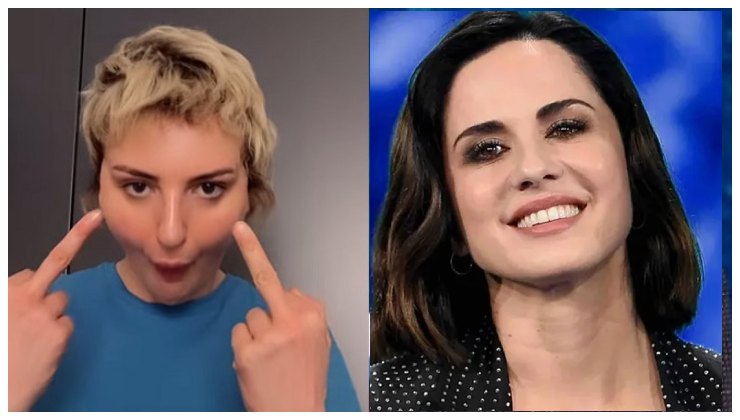
The climax of Arisa's video, which truly broke the internet, was her raw and explicit personal attack: "If you see me on the street, don't even say hello, because I hate hypocrisy, and then, grow up a bit, you're almost 50 years old, beautiful," concluding with a forceful middle finger directed at her colleague. This visceral reaction cemented the clash as one of the most memorable celebrity feuds in recent Italian memory, demonstrating the raw, unfiltered power of Arisa's social media presence.
Beyond the Battle: Arisa's Broader Social Media Reflections
While the spat with Paola Iezzi captured headlines, Arisa's use of social media and her candidness about personal struggles are not new phenomena. Arisa has frequently used her platforms as a confessional, sharing vulnerabilities about love, heartbreak, and self-discovery. A few years ago, she even famously opened applications for a husband on social media, a testament to her unique and often unfiltered approach to public life. This history provides context for her passionate response, suggesting that her strong emotional reaction is consistent with her authentic persona.
More recently, Arisa has spoken profoundly about the "highs and lows" in her love life, recounting how she's "been brought down to earth by men." She admitted, "I was a doormat," but has since gained new self-awareness, recognizing an "allergy to toxic relationships." This newfound clarity has led her to prioritize self-care, friends, animals, and music, even if it means foregoing her desire for children or living a solitary life. "My big problem is that I can't make love with someone I'm not in love with," she shared, emphasizing her deep emotional connection requirements.
This journey of self-discovery and recovery from past pains underlines the authenticity many find compelling in Arisa's social media interactions. Unlike some celebrities who carefully curate every post, Arisa often reveals her raw emotional state, making her an intriguing figure on social platforms. The digital stage, where artists like Arisa – and indeed other iconic figures such as Rettore – navigate public perception and personal expression, allows for this kind of direct, unmediated communication, bridging the gap between artist and audience, even when it leads to conflict.
Her reflections also touch upon the broader impact of social media, with Arisa musing that perhaps if artists like Mia Martini had had access to these platforms, their struggles might have been better understood, potentially averting tragic outcomes. This perspective highlights the dual nature of social media: a potential haven for connection and support, but also a crucible for intense public scrutiny.
The Evolving Landscape of Celebrity, Authenticity & Social Media
The Arisa vs. Paola Iezzi clash is more than just a fleeting scandal; it's a microcosm of larger trends in celebrity culture and social media engagement. It underscores the intense pressure on public figures to navigate complex social and political landscapes, often with little room for nuance. Artists are increasingly expected to take definitive stances on sensitive issues, and any perceived deviation can invite swift backlash from both peers and the public.
The incident also raises questions about authenticity versus performance. While Arisa's outburst was raw and seemingly uncalculated, it also generated immense publicity. In an era where engagement often trumps decorum, such dramatic exchanges, though controversial, undeniably keep artists in the public consciousness. This creates a challenging environment for artists, forcing them to weigh genuine self-expression against potential professional repercussions.
For audiences, these public spats serve as a reminder of the human element behind celebrity. They offer a glimpse into the often-stressful lives of those in the public eye, whose personal opinions and actions are constantly dissected. It also encourages critical consumption of social media content, urging users to consider the full context before forming judgments or taking sides. Understanding the nuances of these interactions, the history of the individuals involved, and the broader social commentary can lead to a more informed perspective.
Practical Takeaways for Navigating Digital Interactions:
- Context is King: Always seek the full story behind a soundbite or viral clip.
- Emotional Intelligence: Recognize that public figures are people too, subject to emotions and pressures.
- Digital Footprint: Remember that what is posted online lives forever and can have lasting impacts, both positive and negative.
- Authenticity vs. Strategy: Differentiate between genuine expression and calculated moves designed for attention.
In conclusion, the social media feud between Arisa and Paola Iezzi was a dramatic demonstration of the power and peril of digital platforms in the world of celebrity. It wasn't merely a personal spat but a reflection of broader tensions concerning activism, authenticity, and the relentless demands placed on public figures. As Arisa continues her journey of self-discovery, and artists across the board navigate the digital stage, such clashes remind us that the line between private opinion and public spectacle on social media remains incredibly thin.