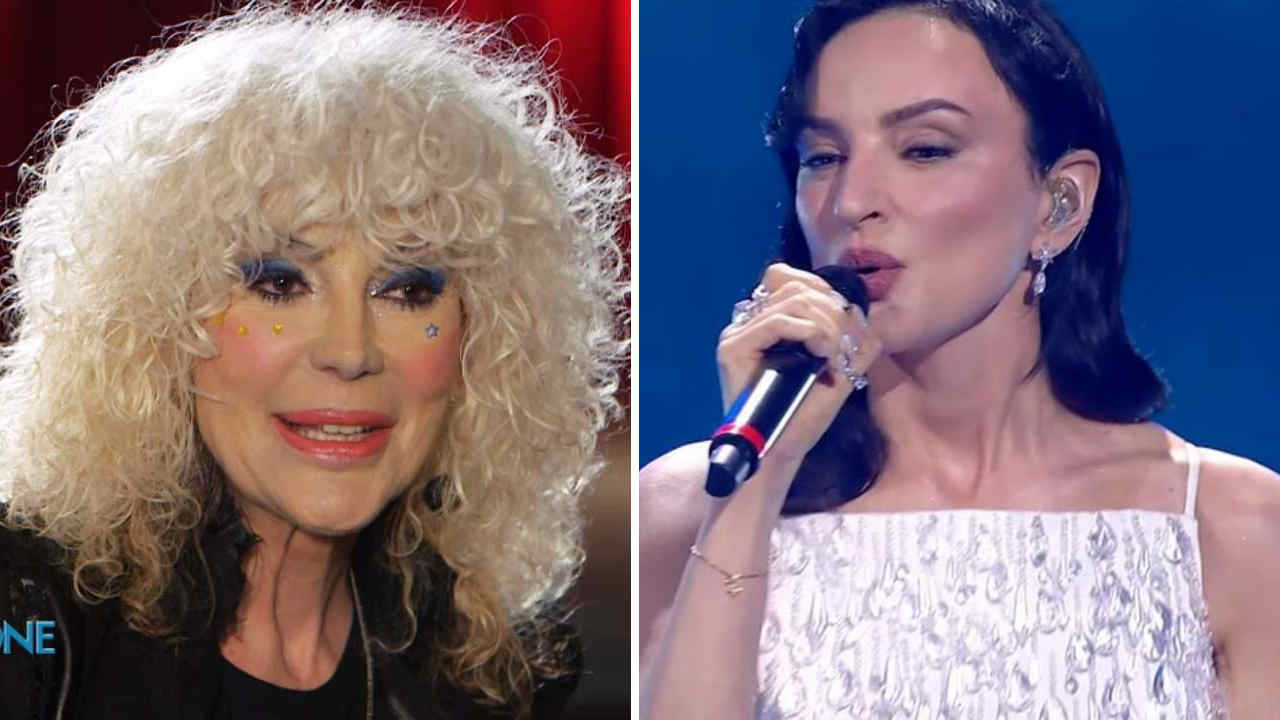
Arisa: A Deep Dive into Love, Toxic Relationships, and the Complexities of Social Media
In the vibrant and often tempestuous world of Italian music and media, few figures command attention quite like Arisa. Known for her powerful voice, distinctive style, and an unfiltered personality, Arisa (born Rosalba Pippa) has consistently captured headlines, not just for her musical prowess but also for her candid take on life's challenges. From explosive celebrity feuds played out on public platforms to deeply personal revelations about love and self-discovery, Arisa offers a compelling case study in the intersection of artistry, vulnerability, and the pervasive influence of digital connectivity. Her recent engagements across various platforms underscore how celebrity discourse shapes public opinion, offering insights into the evolving dynamics of personal boundaries and societal expectations in the digital age.
The Fiery Exchange: Arisa vs. Paola Iezzi on Social Media
The digital arena recently became the battleground for a heated exchange between Arisa and Paola Iezzi, one half of the iconic Italian duo Paola & Chiara. The confrontation ignited following Paola & Chiara's celebrated return to the spotlight at the Sanremo Festival and their prominent role as godmothers of Gay Pride. During an interview, Paola Iezzi made comments widely interpreted as a subtle jab at Arisa, particularly concerning Arisa’s perceived "unfortunate" stance regarding Premier Giorgia Meloni and the LGBTQ+ community.
Paola suggested that "Many artists are afraid of not working anymore if they expose themselves in certain ways, not all of us have the same ‘self-confidence’ or covered backsides." She further added, "She, too, perhaps, has been a victim of discrimination that surely marked her, but one must always find the courage and strength to expose oneself." These remarks, though not explicitly naming Arisa, touched a raw nerve.
Arisa’s response was swift and uncompromising, delivered through a video on her official Instagram channel. She expressed profound disappointment in Paola, an artist she had long admired, for speaking about her "without ever putting a good word for all that I have done for the LGBTQ+ community." Arisa vehemently defended her commitment to the community, asserting, "I have truly worked for them and didn't just go to the square saying ‘Viva l’amore’ adorned with sequins," a clear critique of Paola & Chiara’s flamboyant Gay Pride attire.
The exchange escalated as Arisa directly challenged Paola’s insinuation about her fear of losing work. "No… my dear, perhaps *you* are afraid of not working. That's why you are a slave to certain things," she retorted, flipping the narrative. The climax of Arisa’s message, which quickly went viral, involved a forceful middle finger directed at her colleague, accompanied by a blunt refusal to be greeted by Paola in person: "If you see me on the street, don't even greet me because I hate hypocrisy, and then, grow up a bit, you're almost 50 years old, beautiful."
This dramatic social media feud captivated audiences, dividing opinions across the web and highlighting the intensity of public discourse among celebrities. It serves as a potent reminder of how personal opinions, especially concerning sensitive social and political issues, can rapidly escalate into very public confrontations in the digital age. For a more detailed look at this clash, read
Arisa vs. Paola Iezzi: The Explosive Social Media Clash and
Arisa Defends LGBTQ+ Work Amidst Paola Iezzi's Accusations.
Beyond the Headlines: Arisa's Candid Reflection on Love and Toxicity
Away from the public spectacle of social media clashes, Arisa has offered equally profound insights into her personal life, particularly her experiences with love and relationships. She has long been an open book when it comes to her vulnerabilities, often speaking about heartbreaks and difficult romantic encounters. During a Sanremo press conference, she revisited these past struggles, stating, "In my life, I've had ups and downs, especially in love. Since I was little, I've had the idea that I must have love and I haven't thought of anything else. I've had men who from the stars made me fall with my butt on the ground."
However, these past sufferings have not broken her; rather, they have forged a new sense of awareness and resilience. Arisa now describes a newfound "allergy to toxic relationships," a realization that has prompted her to consciously avoid them. She candidly acknowledges a pattern in her past, noting, "My way of being attracts only those people, what do I do? Change at 43 years old? Maybe my life is to be alone, with friends, animals, music." This powerful self-reflection speaks volumes about her journey toward self-acceptance and prioritizing her well-being over the societal pressure to be in a romantic relationship.
Arisa’s current path is one of dedicated self-love. She finds immense joy and contentment in her solitude, focusing on her passions, her friendships, and the unconditional love of her pets. This stance is particularly poignant given her previously expressed desire to have a child, illustrating a profound shift in her life priorities. Her perspective on intimacy is equally profound: "I can't make love with someone I'm not in love with. I kiss once and I'm in it for at least a year." This highlights a deep need for emotional connection and commitment, a stark contrast to casual encounters.
Reflecting on her past, Arisa admits to having been a "doormat" for love, willing to sacrifice everything for a partner. Yet, she now expresses gratitude for choosing music, her true calling, which has ultimately provided a stable and fulfilling purpose. Her journey serves as an inspiration for anyone grappling with unhealthy relationship patterns, emphasizing the importance of recognizing one's worth and setting boundaries for a healthier, happier life.
Social Media's Double-Edged Sword: A Platform for Feuds and Vulnerability
Arisa's experiences vividly illustrate the multifaceted impact of social media in contemporary society. It's a platform where celebrity feuds ignite instantly, personal vulnerabilities are laid bare, and public figures navigate a constant tension between authenticity and image management. The `rettore arisa social` sphere, in particular, showcases this complex interplay, serving as both a direct communication channel and a hotbed for controversy.
The Power and Perils of Online Engagement
Social media offers undeniable advantages for artists like Arisa:
- Direct Communication: It allows her to connect directly with fans, share her thoughts unfiltered, and bypass traditional media gatekeepers.
- Advocacy Platform: As seen with her defense of her LGBTQ+ work, it provides a powerful stage for social advocacy and expressing solidarity.
- Narrative Control: Artists can actively shape their own stories and respond to accusations or misrepresentations in real-time.
- Community Building: For sensitive topics or personal struggles, social media can foster a sense of community and support, as Arisa's own past ventures to find a partner on social media indicated a desire for connection.
However, the perils are equally significant:
- Amplification of Conflict: As demonstrated by the clash with Paola Iezzi, disputes can quickly escalate into widespread public spectacles.
- Instant Judgment and Toxicity: The speed and anonymity of online platforms can lead to harsh criticism, cyberbullying, and misinterpretations of nuanced statements.
- Pressure to Perform: Public figures often face immense pressure to maintain a certain image, leading to anxiety and burnout.
- Erosion of Privacy: The line between public and private life becomes increasingly blurred, making vulnerability a double-edged sword.
Arisa herself has offered a poignant reflection on the potential positive impact of social media, suggesting that legendary Italian singer Mia Martini might not have succumbed to her tragic fate if such platforms had existed during her time. This implies that social media, despite its flaws, could offer a crucial support system, a direct voice to challenge narratives, and a community to lean on during times of crisis.
Navigating Online Conflicts: Lessons from Arisa's Stance
Arisa's direct and emotionally charged response to Paola Iezzi, while controversial, highlights the intensity of online feuds. For both public figures and everyday users, navigating online conflicts requires careful consideration:
- Pause Before Posting: Emotional reactions can often escalate situations. Taking a moment to cool down can prevent regretful posts.
- Assess the Stakes: Is the battle worth fighting? Not every criticism deserves a direct response.
- Focus on Facts: If correcting misinformation, stick to verifiable facts rather than personal attacks.
- Protect Your Mental Health: Disengage from toxic discussions if they become overwhelming. Online validation is not worth your peace of mind.
- Leverage Your Supporters: Allow your community to defend you, rather than engaging every detractor yourself.
Cultivating Healthy Relationships in a Digital Age
Arisa's journey away from toxic relationships offers valuable lessons for everyone. In an age where social media often influences perceptions of love and relationships, cultivating genuinely healthy connections is paramount:
- Recognize Your Worth: Like Arisa, understanding your value is the first step to refusing relationships that diminish you.
- Set Clear Boundaries: Both online and offline, define what you will and won't tolerate. This includes how much of your relationship you share on social media.
- Identify Red Flags: Be attuned to signs of toxicity – manipulation, disrespect, constant criticism, or controlling behavior.
- Prioritize Self-Care: Focus on your own growth and happiness. A fulfilling life independently makes you less susceptible to unhealthy attachments.
- Seek Support: Don't hesitate to lean on friends, family, or professionals if you're in a challenging relationship or recovering from one.
Social media can also complicate relationships, fostering comparison, jealousy, and misunderstandings through curated images and selective sharing. It's crucial to remember that authentic connection happens offline.
Conclusion
Arisa, Rosalba Pippa, remains a compelling and often paradoxical figure in the Italian cultural landscape. Her candid revelations about toxic relationships, her unwavering journey towards self-love, and her willingness to engage in raw, public discourse on social media encapsulate the modern experience. She is a testament to the power of authenticity, the courage required to navigate personal growth, and the complex, often unpredictable nature of fame in the digital age. As she continues to evolve, Arisa sparks vital conversations about personal boundaries, artistic integrity, and the responsibility that comes with having a powerful voice in an increasingly interconnected world. Her story underscores that while social media can be a battleground, it is also a mirror reflecting our deepest vulnerabilities and our greatest strengths.